.avif)
%201.avif)
.avif)
Book rooms & suites
Select Dates
Guests
Adults
0
Children
0

Standing proudly on the Strand and overlooking the River Thames, The Savoy London has been at the heart of the city’s dining scene since opening its doors in 1889. As London’s first luxury hotel, The Savoy did not simply change where people stayed — it transformed how the city ate, entertained and socialised.
From its earliest days, dining at The Savoy was a cultural event. Guests arrived not only to dine, but to be part of London society itself. Politicians, performers, artists and royalty gathered in its restaurants, where conversation flowed as freely as champagne. Winston Churchill was known to frequent The Grill, while theatre-goers dined before and after performances, blurring the line between stage and dining room.
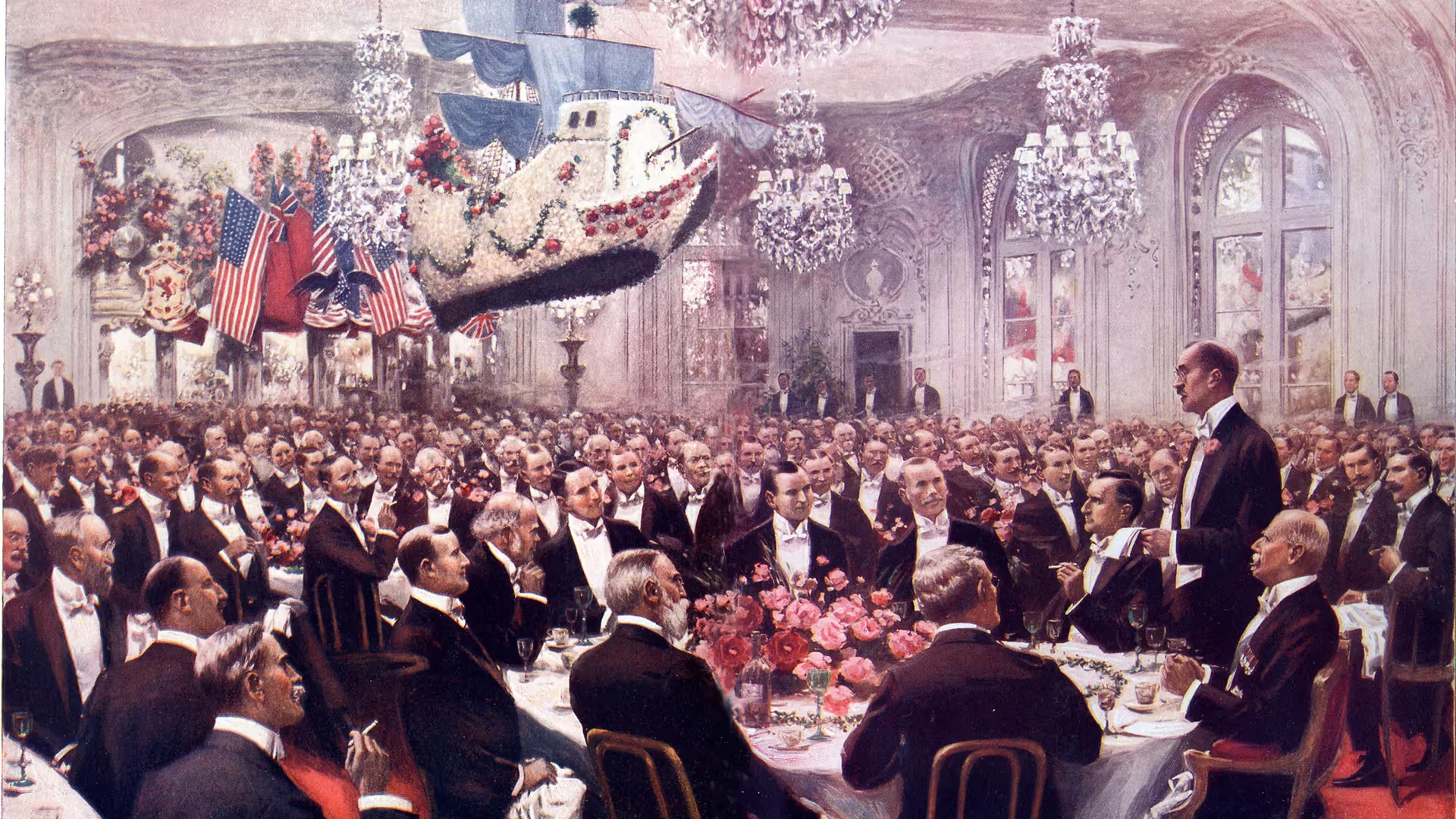
One of the most defining moments in The Savoy’s dining history took place in the space now known as Gallery. During an evening of music and fine dining, a newly engaged couple rose from their table and began to waltz between the courses. What began as a spontaneous celebration quickly captured the imagination of guests and onlookers alike. The moment sparked the birth of the dinner and dance, a social fashion that soon swept through London.
As the popularity of dinner dances grew, the space evolved. Tables were rearranged, dance floors expanded and, before long, a dedicated ballroom was created. The Savoy became synonymous with glamour, music and movement, reinforcing its reputation as a place where tradition was not only preserved, but created.
Soon after the hotel opened, another tradition took root that would become inseparable from The Savoy name: Afternoon Tea. At a time when London society revolved around ritual and refinement, The Savoy offered a setting where guests could pause the day in elegant surroundings. Under glittering chandeliers, tea was poured, scones were served warm, and conversation lingered long into the afternoon.
Over the decades, Afternoon Tea at The Savoy became a rite of passage. From royalty and socialites to artists and musicians, generations of guests have gathered to sip, savour and share moments that became memories. Today, it remains one of the most celebrated Afternoon Tea experiences in London, rooted in history yet timeless in appeal.
While the dining rooms dazzled guests, true innovation was unfolding in the kitchens. Under the leadership of Auguste Escoffier, The Savoy became a powerhouse of culinary excellence. Escoffier revolutionised professional kitchens by introducing the brigade system, dividing the kitchen into specialised stations to ensure consistency, discipline and the highest standards of quality.
Escoffier’s creativity was equally influential. One of his most famous creations was born at The Savoy when Australian opera singer Nellie Melba requested a special dessert. The result was Pêches Melba, an elegant combination of peaches, vanilla ice cream and raspberry sauce that quickly became an international classic and remains associated with The Savoy to this day.
Today, dining at The Savoy continues to reflect its extraordinary heritage. From historic dining rooms to contemporary expressions such as SCOFF, the hotel remains committed to craftsmanship, innovation and tradition. Every meal served is a continuation of a story that began more than a century ago.
At The Savoy London, dining is not simply an experience — it is a living chapter in the city’s cultural and culinary history.
Discover more about what makes The Savoy so remarkable through a guided tour from our onsite Archivist, Susan Scott. Enjoy an intimate tour through the hotel and our most prestigious areas, followed by a glass of Champagne in our storied American Bar. Enquire now by emailing savoy@fairmont.com.
From its earliest days on the Strand, overlooking the River Thames, The Savoy London attracted the most discerning guests in society. It quickly became the place to host events that impressed, astonished and redefined what was possible in luxury hospitality. To be invited to a party at The Savoy was not simply to attend an event, but to take part in a spectacle.
Those who chose The Savoy as their venue expected more than elegance. They expected imagination, precision and drama, and the hotel delivered time and again. From extravagant birthday celebrations to glittering balls, The Savoy established itself as London’s most glamorous stage for unforgettable occasions.
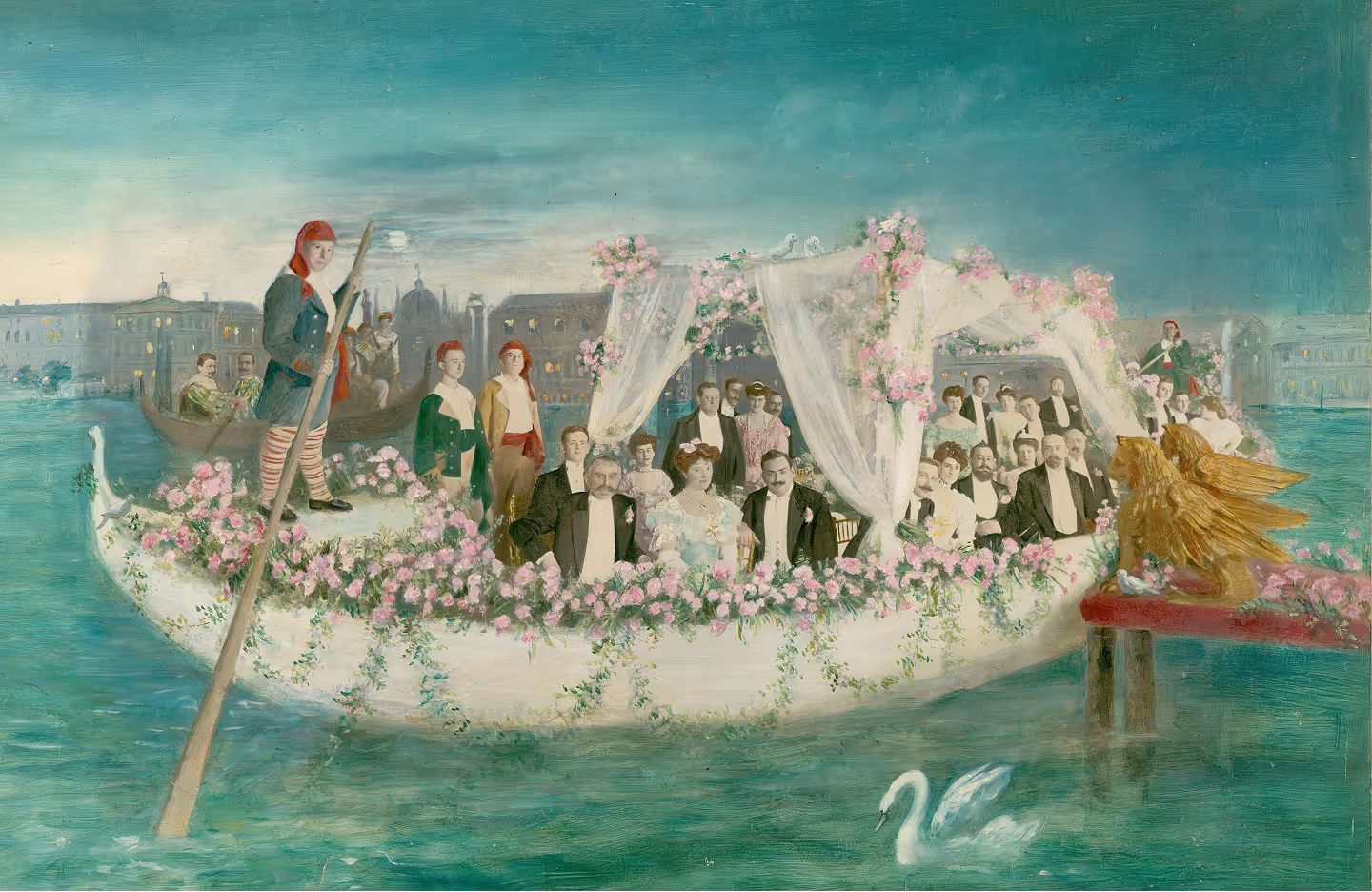
One of the most legendary events in The Savoy’s history was hosted by American millionaire and city planner George Kessler, one of the hotel’s most loyal and esteemed guests. To celebrate his birthday, Kessler invited just twenty-three close friends, but what unfolded was anything but intimate. Determined to put on a show, he worked closely with The Savoy team to create an experience unlike anything London had ever seen.
Guests arrived at the hotel’s original entrance on Savoy Hill and were asked to step out of their carriages before entering the courtyard. As they passed beneath the archway, they were met with a breathtaking sight. The entrance courtyard, now known as the Lancaster Ballroom, had been completely flooded. Gondolas replaced carriages, swans glided across the water, and painted Venetian backdrops transformed the space into the canals of Venice.
Thousands of carnations filled the air with fragrance, Savoy waiters were dressed as gondoliers, and guests walked along a boardwalk to take their seats aboard gently bobbing boats. As lanterns shimmered beneath a paper moon, Enrico Caruso performed an aria, a baby elephant appeared carrying a five-foot-high birthday cake, and one hundred white doves were released into the air. Every moment was perfectly timed. Once again, The Savoy had exceeded all expectations.
Extravagance continued well into the modern era. On 6 August 1989, The Savoy marked its centenary with a celebration worthy of its legacy. Hosted by the Directors of The Savoy Group, led by Chairman Sir Anthony Tuke and Managing Director Giles Shepard, the evening brought together guests from around the world.
On a warm summer night, diners enjoyed a lavish dinner in the Lancaster Ballroom before dancing to the Lester Lanin Orchestra from New York. The celebrations continued with a spectacular fireworks display, visible not only from the hotel’s river-view rooms but also from the SS Queen Mary, moored at Savoy Pier on the Thames. It was a night that honoured the past while celebrating The Savoy’s enduring place in London society.
The Savoy’s role as a venue extended beyond balls and banquets. The hotel became a natural home for creativity and culture, hosting events across fashion, art and design. In 1950, Christian Dior chose The Savoy to unveil his spring and summer collection, transforming the ballroom into a catwalk for high society. Among those in attendance was the young Princess Elizabeth, adding further prestige to the occasion.
Fashion has remained woven into The Savoy’s fabric ever since, with contemporary designers such as Connor Ives continuing the tradition. Today, The Savoy remains one of London’s most sought-after event venues, where history, imagination and celebration come together.
At The Savoy London, every event is more than a gathering — it is a moment that becomes part of the hotel’s remarkable story.
Discover more about what makes The Savoy so remarkable through a guided tour from our onsite Archivist, Susan Scott. Enjoy an intimate tour through the hotel and our most prestigious areas, followed by a glass of Champagne in our storied American Bar. Enquire now by emailing savoy@fairmont.com.
For over a century, The Savoy London has been more than a hotel. It has been a stage where the world’s most iconic names found inspiration, made headlines, and created lasting memories. From artists to actors, musicians to political figures, the hotel has welcomed those who shaped culture, fashion, sport, and history, offering a London home that combined luxury, discretion, and unparalleled elegance.
Long before Gucci became a global name, young Guccio Gucci worked at The Savoy as a luggage porter. Surrounded by the hotel’s elegant trunks and travel cases, he found the inspiration to dream beyond London, imagining a brand that would redefine fashion worldwide. The Savoy’s attention to craftsmanship, style, and detail left an indelible impression on the young designer, proving that even a hotel could spark creative genius.
Claude Monet was another visionary drawn to the hotel’s inspiring surroundings. From his favourite suite overlooking the Thames, he painted misty masterpieces of London’s skyline, capturing the light, movement, and atmosphere of the city in the late 19th and early 20th centuries. The view may have changed over the decades, but the artistry inspired by it remains timeless.
No view in London rivals that from The Savoy’s rooftop. It has been reserved for the most remarkable moments and guests over the years. Fred and Adele Astaire once danced against the backdrop of the city lights, while golfing legend Walter Hagen famously teed off into the London air. These are just a few of the unforgettable moments that have defined the hotel’s rooftop as a place of celebration, spectacle, and memory.
Inside the gilded spaces of the hotel, The Savoy has hosted countless legendary press conferences. Marilyn Monroe promoted her work in The Prince and the Showgirl, Muhammad Ali launched his autobiography The Greatest: My Own Story, and the hotel even doubled as the set for Notting Hill, capturing the glamour of the Savoy Ballroom for the big screen.
When cinema rose to prominence, The Savoy became Hollywood’s London home. Cary Grant, Mary Pickford, Marlene Dietrich, and Laurel and Hardy were among the stars who frequented the hotel, bringing international glamour to the Strand and adding to its reputation as a gathering place for the world’s elite.
The Savoy was not only the playground of artists and actors; it was a meeting place for decision-makers. Winston Churchill, in particular, was a devoted guest. He hosted meetings at the Pinafore Room, dined at his favourite table in The Grill, and even learned of Neville Chamberlain’s resignation while lunching in The River Restaurant — a moment that would change the course of British history.
From artists painting and stars dancing to world leaders deciding the fate of nations, The Savoy has seen it all. These walls have witnessed creativity, celebrity, political intrigue, and historic milestones. For over 130 years, The Savoy London has remained a home for icons, legends, and those seeking inspiration, cementing its place at the very heart of the city’s cultural and social life.
Discover more about what makes The Savoy so remarkable through a guided tour from our onsite Archivist, Susan Scott. Enjoy an intimate tour through the hotel and our most prestigious areas, followed by a glass of Champagne in our storied American Bar. Enquire now by emailing savoy@fairmont.com.
The Savoy London has long been a home for world-class hospitality, and no story of the hotel is complete without its legendary bars. From The American Bar, London’s oldest cocktail bar, to The Beaufort Bar, a space born from the grandeur of the Winter Garden, The Savoy has defined the city’s cocktail culture for over a century. These bars have hosted celebrities, royalty, political figures, and creative pioneers, each leaving their mark on the history of mixology and social life in London.
The American Bar is the oldest continuously operating cocktail bar in London. Since opening, it has been renowned for its inventive drinks, world-class bartenders, and famous guests. Over the decades, it became an institution for cocktail enthusiasts and a destination for those seeking a refined, theatrical drinking experience.
One of the earliest legends of the American Bar was Ada Coleman, The Savoy’s first female bartender. In a male-dominated world, she became renowned for her charm, creativity, and technical skill. Coleman created some of the bar’s most enduring cocktails, including the Hanky Panky. When a regular guest requested a drink with “a bit of punch,” Coleman combined gin, sweet vermouth, and bitters with a finishing twist of orange. The guest famously exclaimed, “By Jove! That is the real Hanky-Panky!”
Following Coleman, Harry Craddock became the next iconic figure behind the American Bar. Arriving at The Savoy in the 1920s, Craddock refined his craft before taking over as Head Bartender in 1925. Craddock served royalty, Hollywood stars, and politicians, including Ava Gardner, Charlie Chaplin, and Errol Flynn. He invented the White Lady cocktail and famously left an un-poured shaker of the drink buried within the bar during renovations — a hidden treasure that remains lost to this day. Craddock also compiled The Savoy Cocktail Book, a definitive guide to cocktail artistry and philosophy that continues to influence bartenders worldwide.
Joe Gilmore followed in Craddock’s footsteps, becoming one of the longest-serving Head Bartenders in American Bar history. Starting at The Savoy as a commis waiter before his eighteenth birthday, Gilmore would serve Churchill, Sinatra, Marlene Dietrich, and Princess Diana. He marked historic events with signature creations, including The Moonwalk, crafted to celebrate the Apollo 11 landing in 1969. Gilmore even sent a flask of the cocktail to NASA, where Neil Armstrong, Michael Collins, and Buzz Aldrin enjoyed it together — with Armstrong personally writing to thank him.
While The American Bar set the standard for cocktails, The Beaufort Bar offered an equally impressive history in style and entertainment. Originally part of The Savoy’s Winter Garden, this elegant space was transformed over the years into a cabaret lounge. Its design included a stage that could rise from the floor, allowing live performers to entertain guests at intimate tables. The Beaufort Bar became a hotspot for sophisticated nightlife, blending music, theatre, and high society glamour.
The bar’s transformation reflected The Savoy’s ability to innovate and adapt. From winter garden gatherings to immersive cabaret performances, the Beaufort offered a space where guests could experience theatricality alongside their drinks. Celebrities and dignitaries flocked to the bar to enjoy the performances, making it one of London’s most iconic social venues. Today, The Beaufort Bar continues this tradition, combining luxurious design with modern mixology while paying homage to its creative past.
Both bars have been essential in establishing The Savoy’s reputation as a home for innovation, sophistication, and unforgettable experiences. From Ada Coleman and Harry Craddock to Joe Gilmore, the American Bar cultivated world-class bartending talent and created cocktails that have endured for generations. The Beaufort Bar, with its theatrical roots, has showcased the hotel’s flair for combining performance, design, and entertainment with social gatherings.
Whether you are sipping a historic cocktail at The American Bar or enjoying a modern creation at The Beaufort Bar, the spirit of The Savoy lives in every pour, every note of music, and every moment of glamour. These bars are not just destinations for drinks; they are living chapters of London’s social and cultural history.
Discover more about what makes The Savoy so remarkable through a guided tour from our onsite Archivist, Susan Scott. Enjoy an intimate tour through the hotel and our most prestigious areas, followed by a glass of Champagne in our storied American Bar. Enquire now by emailing savoy@fairmont.com.
Standing proudly on the Strand, overlooking the River Thames, The Savoy London is far more than the city’s first luxury hotel. It is a place where history, theatre, and hospitality have been interwoven for over 136 years — a landmark where innovation met indulgence and London learned a new definition of glamour.
From the moment guests are welcomed through its iconic doors, The Savoy tells a story that stretches back centuries, long before its famous electric lights first illuminated the Strand.
The name Savoy predates the hotel itself by more than 600 years. Its origins can be traced back to 1240, when Count Peter of Savoy arrived in England and built a grand palace on the banks of the River Thames. The palace quickly became one of the most impressive residences in medieval London, symbolising power, prestige, and continental influence.
Although the palace was destroyed during the Peasants’ Revolt in 1381, the Savoy name endured. In Tudor times, The Savoy Hospital rose on the same site, serving Londoners for generations. Even after the hospital fell into ruin, the name lived on through surrounding streets and landmarks — quietly waiting to be reborn.
That rebirth would come centuries later, in the form of one of the most famous hotels in the world.
The modern story of The Savoy Hotel begins with Richard D’Oyly Carte, an impresario whose influence would change both theatre and hospitality forever. In 1881, Carte opened the Savoy Theatre, the world’s first public building to be fully lit by electricity — a bold statement of progress and modernity in Victorian London.
Carte was already celebrated for bringing the much-loved Gilbert and Sullivan operas to the stage, attracting London’s high society to the Strand night after night. But for him, the theatre alone was not enough.
Inspired by his success in America, D’Oyly Carte envisioned something entirely new for London: a luxury hotel that matched the drama, elegance, and excitement of the performances next door. A place where theatre-goers could dine, socialise, and stay — all under one name.
When The Savoy Hotel opened in 1889, it was unlike anything London had ever seen. Guests were astonished by its electric lighting, elevators (then known as ascending rooms), and constant hot and cold running water — innovations that placed The Savoy firmly at the forefront of modern hospitality.
Even its location was cleverly designed. Savoy Court remains the only road in the UK where vehicles drive on the right, a deliberate choice to allow horse-drawn carriages to deliver guests seamlessly to both the theatre and hotel entrances without disruption.
To bring his vision fully to life, D’Oyly Carte assembled an extraordinary leadership team. He appointed César Ritz, a Swiss hotelier renowned for excellence, as General Manager. Alongside him came Auguste Escoffier, appointed Maître Chef des Cuisines, whose culinary influence would transform fine dining across Europe.
Together, Ritz and Escoffier established standards of service, cuisine, and hospitality that became synonymous with the Savoy name — and would go on to shape luxury hotels around the world.
Today, The Savoy remains one of London’s most iconic luxury hotels, celebrated for its rich history, timeless elegance, and enduring spirit of innovation. From medieval palaces to electric theatres, and from operatic triumphs to world-class hospitality, The Savoy is not simply a hotel — it is a living chapter of London’s story.
Discover more about what makes The Savoy so remarkable through a guided tour from our onsite Archivist, Susan Scott. Enjoy an intimate tour through the hotel and our most prestigious areas, followed by a glass of Champagne in our storied American Bar. Enquire now by emailing savoy@fairmont.com.
Select Dates
Select a Restaurant
The Savoy’s world-famous Afternoon Tea brings a century of tradition to The Gallery — warm scones and over 30 exceptional teas, coming together in an experience that stays with you far longer than an afternoon.
Gallery brings a vibrant energy to The Savoy — an elegant all-day dining space where British heritage, modern style and warm service come together from breakfast through to late-night cocktails.
The American Bar is the original cocktail bar in London and one of the most renowned in the world. Serving classics with a twist, new and vintage creations – the American Bar is an icon in cocktail history and has played host to legendary bartenders.
Beaufort Wine Bar redefines wine discovery in one of London’s most celebrated hotels. Guided by Head Sommelier Romain Audrerie, our cellars bring together an extraordinary collection of over 250 wines from 18 countries across six continents, with over 120 served by the glass.
Restaurant 1890 brings together meticulous service, modern tasting menus, an elegant bar space, and a world-class wine list, guided by craft and precision.
Gordon Ramsay’s famed Savoy Grill, with its Art Deco style and Hollywood glamour, presents twists on the traditional, with an iconic British and French-inspired menu alongside an exceptional wine list.
The River Restaurant presents stylish, relaxed all-day dining in The Savoy, with a vibrant, produce-led menu that’s shaped by the seasons and tides.